Uxbridge has more than its share of interesting buildings: farmhouses that have been added to over generations, country homes on open lots, even converted barns. They are lovely to live in and hard to heat. The reason is usually not one big flaw. It is that heat leaves a house in three different ways, and an older or pieced-together home tends to be weak on all three.
Once you know the three routes, the fixes make sense. Attic insulation handles one of them. The others need attention too.
Route 1: Heat carried out by moving air
Warm air rises and escapes through gaps at the top of the house. Cold air is drawn in at the bottom to replace it. On an exposed country lot, wind speeds the whole process up.
Natural Resources Canada’s Roofs and attics guide says attic air leaks around chimneys, vents, plumbing pipes and electrical boxes can account for substantial heat loss. In a house with additions, the joints where old meets new are common leak points too.
How to stop it
- Air seal the attic floor before insulating.
- Seal the rim joist with spray foam insulation.
- Consider AeroBarrier to tighten the whole envelope.
- Weatherstrip doors, windows and the attic hatch.
We explain the thinking in treating your home as a system.
Route 2: Heat passing straight through the building
Even with no air movement, heat conducts through ceilings, walls and floors. The thinner the insulation, the faster it goes. This is the route attic insulation is built to block.
How to stop it
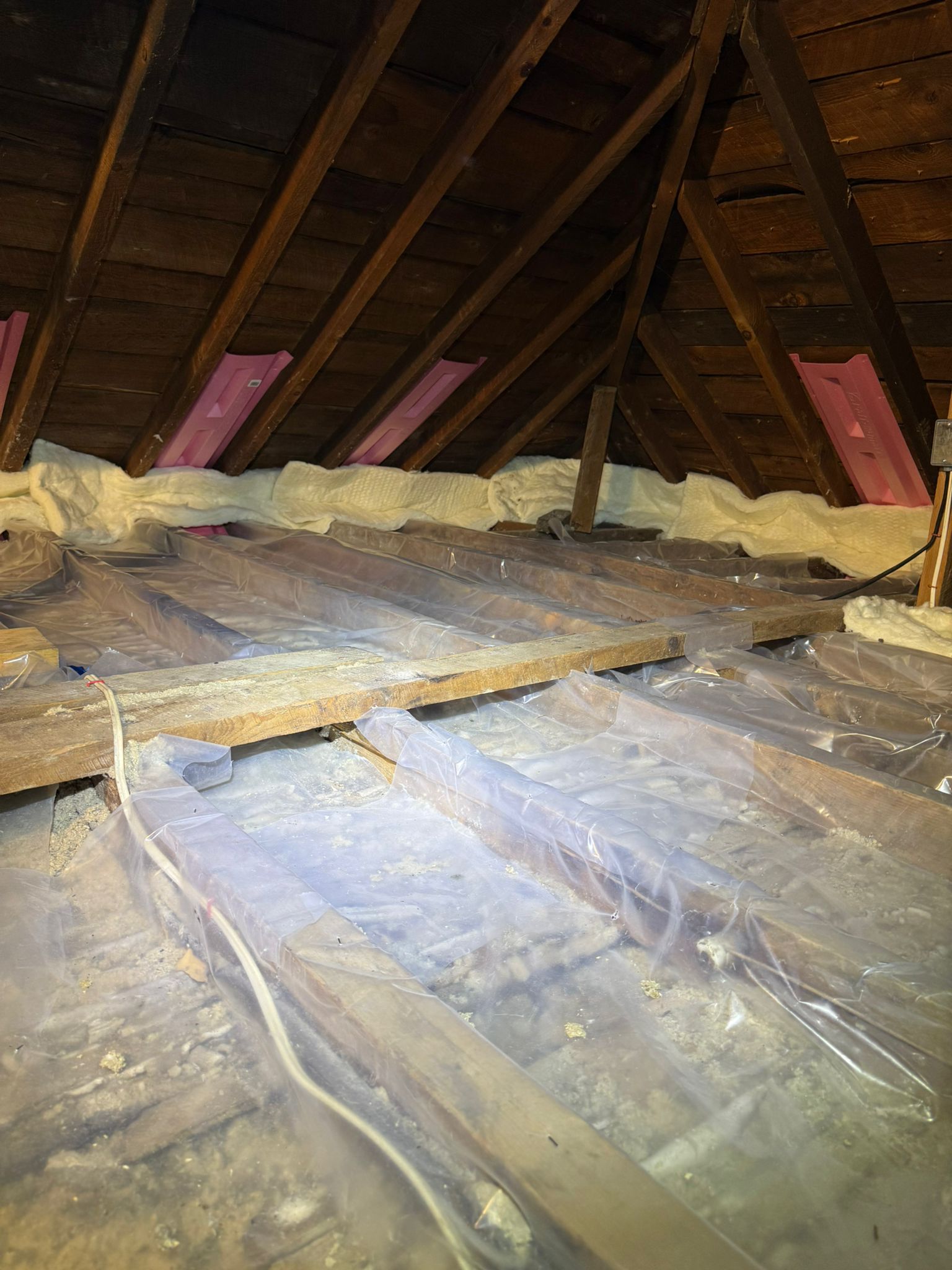
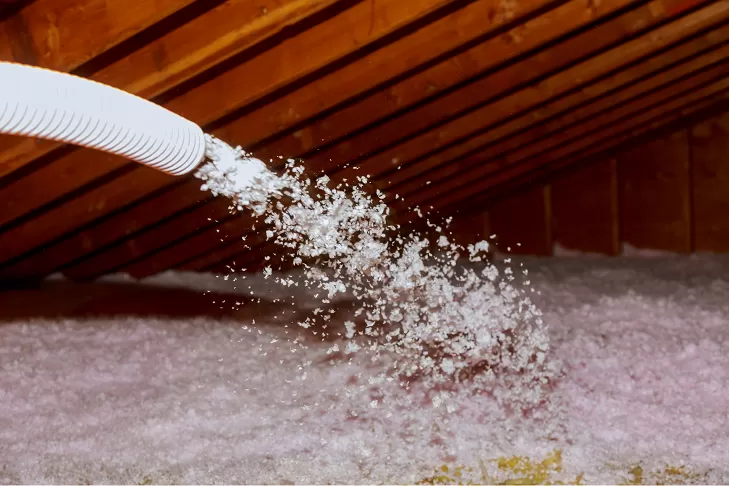
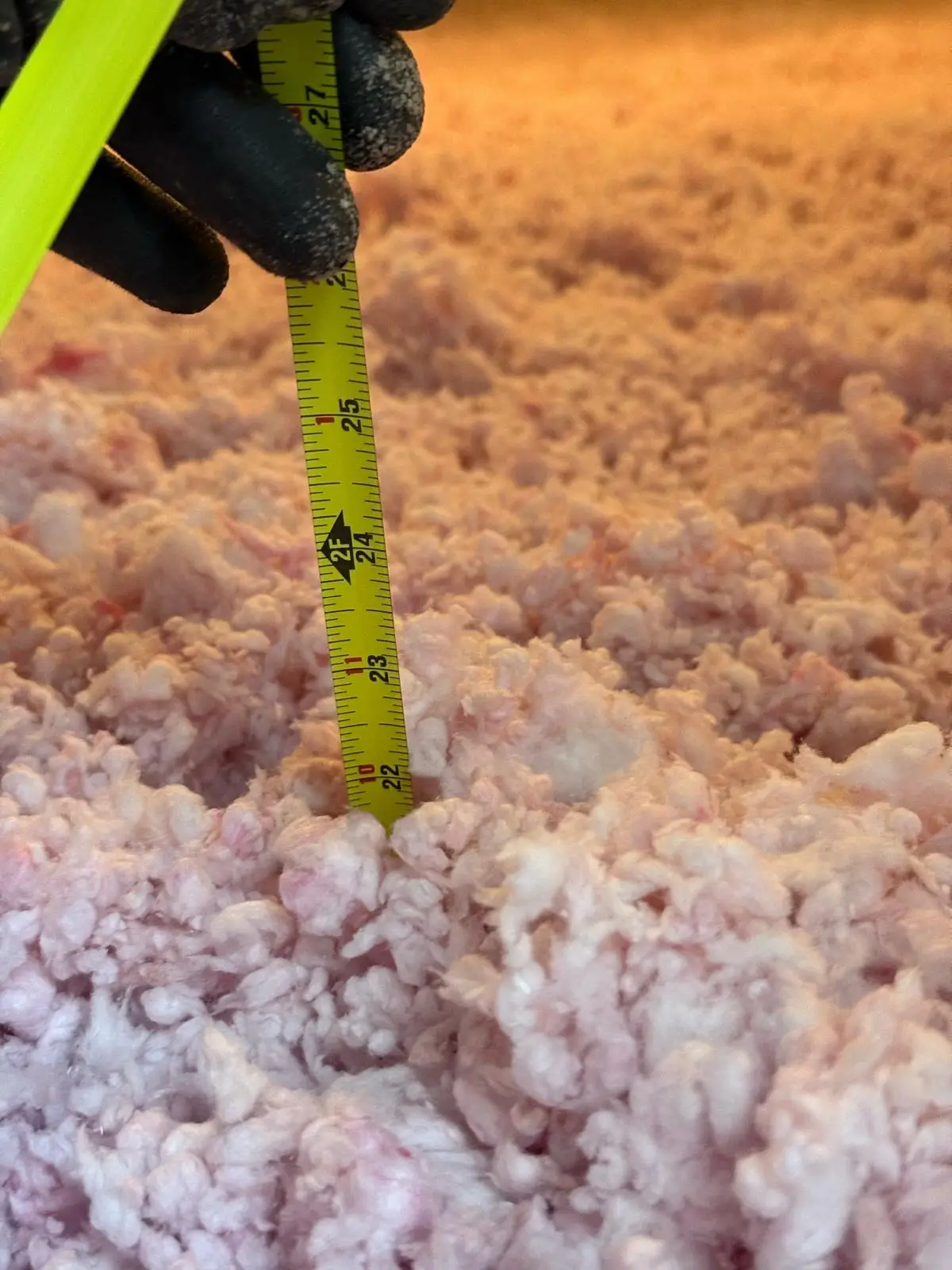
- Ceiling: top up through our attic insulation service in Uxbridge, with blown-in cellulose or fibreglass. Here is how to know if your attic needs more.
- Walls: Natural Resources Canada notes that uninsulated walls can lose more heat than a typical attic. Drill and fill insulation fills empty cavities without removing plaster or siding.
- Floors over cold spaces: garage ceiling insulation for rooms above a garage.
Unusual roof shapes need their own plan. See attic insulation for farmhouses, additions and converted barns and keeping an older country home comfortable.
Route 3: Heat lost to moisture
This one is less obvious. Warm indoor air carries water vapour. When it leaks into a cold attic it condenses, and damp insulation stops working. So a moisture problem quietly becomes a heat problem.
How to stop it
- Keep soffit vents open with baffles.
- Make sure bathroom and kitchen fans vent outdoors, not into the attic.
- Replace insulation that is already wet or mouldy. See attic mould and insulation removal in Uxbridge and our removal service.
- In crawlspaces, a vapour barrier keeps ground moisture out.
One caution for older attics: loose grey-brown granules may be vermiculite. Natural Resources Canada advises leaving it undisturbed until it has been assessed.
Why you need all three
Fix only one route and the other two keep working against you. Deep insulation over a leaky ceiling still loses heat to air movement. A sealed, insulated attic with blocked vents collects moisture.
For a sense of scale, the U.S. EPA estimates average savings of 15% on heating and cooling from air sealing and adding insulation in attics, crawl space floors and basements (ENERGY STAR). That is a modelled U.S. average, and an older country home may land well away from it in either direction.
Rebates
Some rebate routes involve an energy assessment, which also tells you which of the three routes is costing you most. See why the energy assessment is worth it and our energy rebate page.
Find out which route is costing you most
Contact us for an estimate and we will look at all three.