Uxbridge is full of the kind of homes people fall in love with — century houses in town, farmhouses and estate properties out on the moraine, character homes with history in the walls. They’re wonderful to live in nine months of the year.
Then January arrives, the propane bill lands, and the upstairs still won’t warm up.
Older country homes are charming and expensive to heat, and the two are related: the same age and construction that give them character also make them leak heat. The good news is that the attic is almost always the biggest, most cost-effective fix — and you can make one of these homes genuinely comfortable without changing what you love about it. Here’s how.
Why older Uxbridge homes cost so much to keep warm
Three things stack up in a typical older country home here:
They started with little or no insulation. A century home or older farmhouse was built long before modern insulation standards. Whatever’s in the attic was often added later, in a hurry, and wasn’t much to begin with.
They’re leaky. Older construction has gaps — around the chimney, at the top of walls, through the many small penetrations decades of renovations leave behind. Warm air pours out through them.
Many heat with propane or oil, not gas. Out on the moraine and through much of rural Uxbridge, there’s no natural gas line. Homes run on propane, oil, or wood — and propane and oil cost considerably more per unit of heat than gas. So every bit of escaping heat costs you more than it would a town home on gas.
Put together, an older Uxbridge country home on propane can be one of the most expensive homes to heat in the region — and one of the most rewarding to insulate properly, because the savings are correspondingly large.
Start by measuring what’s actually up there
Don’t assume from the age of the house — measure.
- Open the attic hatch, shine a light, step only on joists
- Push a ruler to the drywall at several spots, including near the eaves
- Convert:
| Material | R per inch | 4 in | 8 in | 12 in |
|---|---|---|---|---|
| Blown cellulose | ~3.4 – 3.8 | ~R-14 | ~R-28 | ~R-42 |
| Blown fibreglass | ~2.7 – 3.0 | ~R-11 | ~R-22 | ~R-34 |
| Old settled batts | ~2.5 – 3.2 | ~R-11 | ~R-22 | — |
Target: R-50 minimum to qualify for the rebate, R-60 as the goal. Many older Uxbridge attics measure well under R-25 — which means there’s a large, cost-effective improvement available.
What older country homes specifically need
Air sealing — the biggest lever in an old house
In a leaky older home, air movement carries away a huge share of your heat. Sealing the ceiling — around the chimney chase, the tops of interior walls, wiring, plumbing, old light fixtures, the attic hatch — is often the single highest-impact step, more so than in a tighter modern home.
Seal first, insulate second. Blow new insulation over an unsealed ceiling and you’ve buried the leaks where nobody can reach them. In an old house, that’s the difference between a warm home and a still-drafty one with more insulation in it.
Watch for vermiculite and old materials
Older attics may hold vermiculite — loose greyish pebble-like granules that can contain asbestos. Don’t disturb it; have it tested before any work. You may also find old rock wool, wood shavings, or layered materials that are so settled and dust-laden that removal makes more sense than topping up. Attic insulation removal →
Respect the ventilation
Many older homes have limited or improvised attic ventilation. Adding insulation without confirming the attic can still breathe — clear soffit intake, baffles, a working exhaust path — risks trapping moisture and causing frost and ice dams. Ventilation is part of the job, not an afterthought. Baffle installation →
The walls are often part of the story
Older Uxbridge homes frequently have little or no wall insulation, and you usually can’t open the walls of a character home without a major renovation. Drill and fill insulates them through small holes, then patches — a way to warm up an old house without gutting it. On an expensive-to-heat rural home, the walls are worth considering alongside the attic. Drill and fill →
Additions and wings
Older country homes accumulate additions over the decades — a summer kitchen, a back wing, a converted porch. Each was built to its own era’s standard and often insulated poorly. They need checking individually, not assumed to match the main house.
Doing right by an old house
The worry people have with older homes is real: an old house was often built to breathe, managing moisture by letting it move through the structure. Aggressively sealing and insulating parts of an old home without thought can trap moisture where it used to escape.
This doesn’t mean don’t insulate — plenty of older Uxbridge homes are insulated safely and comfortably. It means the approach has to respect how the house manages moisture, especially in walls and any below-grade areas. A good assessment on an older home considers this rather than applying a one-size-fits-all method. The attic floor is usually the most straightforward part; walls and basements need more care.
What a proper job looks like
- Assess — measure depth, identify material, check for vermiculite, check ventilation and how the house handles moisture
- Test or stop for vermiculite where present
- Remove only if contaminated or badly degraded
- Air seal the ceiling plane — the highest-value step in an old home
- Install baffles, confirm soffit intake
- Insulate and weatherstrip the hatch
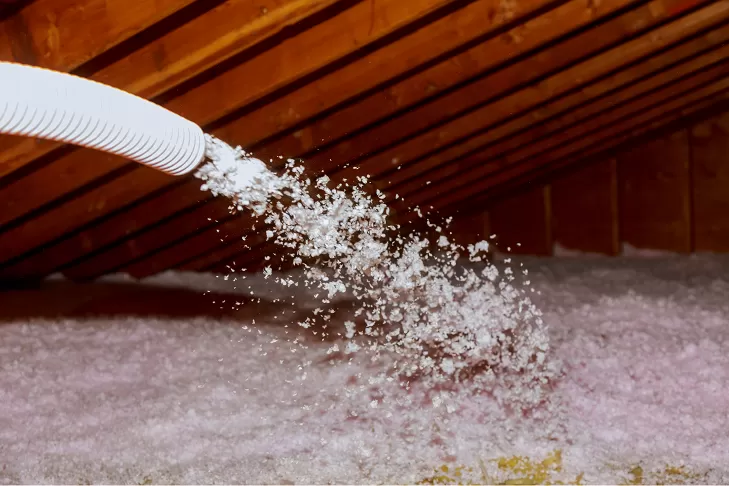
- Blow to depth, out to the eaves — R-50 minimum, R-60 target
- Mark depths so the result is verifiable
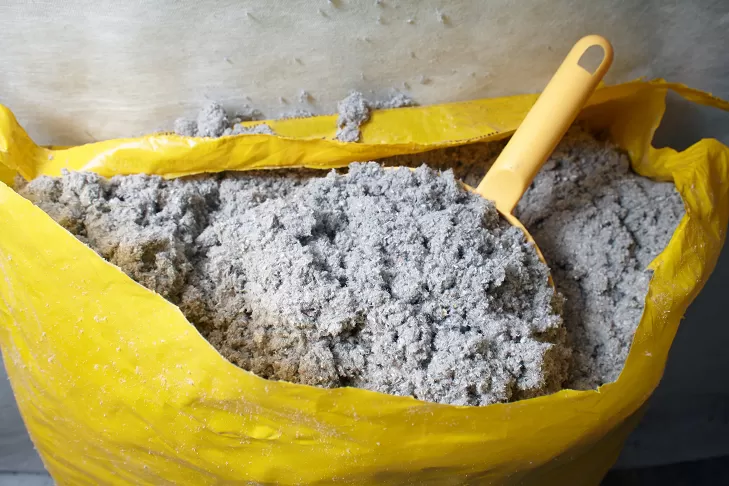
On material: cellulose gets more R-value into less depth, is denser, and slows air movement well — good for a leaky old home. Fibreglass is lighter and often cheaper for the same value. Both are rebate-eligible.
Cellulose blown-in → · Fibreglass blown-in →
Frequently asked questions
My house is a century home. Can it be insulated without ruining its character? Yes — attic work is invisible from inside, and walls can often be done via drill and fill without opening them. The key is an approach that respects how an old house manages moisture.
I heat with propane. Is insulating really worth it? More than for a gas home — propane costs more per unit of heat, so stopping heat loss saves you more. Older rural homes on propane have some of the best paybacks around.
What’s vermiculite and should I worry? Loose greyish pebble-like granules in some older attics; it can contain asbestos. Don’t disturb it — have it tested first.
Do I have to remove the old insulation? Only if it’s contaminated by mould, water, rodents or smoke, if it’s vermiculite needing testing, or if it’s so degraded that removal beats topping up. Otherwise new goes over old and the R-values add.
Do I have to leave home during the work? No.
How long does it take? A straightforward attic top-up is usually a single day; removal, ventilation work, or an older home’s complications extend it.
Get an older home assessed by people who respect old homes
A century home or country property deserves an approach that makes it comfortable and cheaper to heat without compromising what makes it special — and that starts with a proper look at the attic, the ventilation, and how the house handles moisture.
Pro Insulation Contracting has insulated Ontario homes for over 10 years and serves Uxbridge and the surrounding townships. Free on-site assessment, written scope, fixed price before any work starts — and an honest word if we find vermiculite or anything that needs handling first.
📞 705-315-8118 · Book a free attic assessment →